


Mid-workout, you feel something: a twinge in your shoulder, a pinch in your knee. Stop? Slow down? Ignore it? Everyone faces this question sooner or later. The answer comes down to one thing: what kind of pain it is. Telling them apart is what separates people who train for years from those who get hurt in week three.
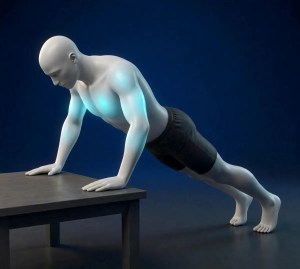
(I know this well: my wrists have been sensitive from day one. That's why I do my table rows gripping the side of the table, not the top edge. Tweaking the movement instead of dropping it — that's often the whole fix.)

Soreness: it's normal, really
Soreness isn't an injury — it's your body adapting. A few pointers:
- It shows up 24 to 48 hours AFTER your workout, not during it. Pain while exercising? That's not soreness.
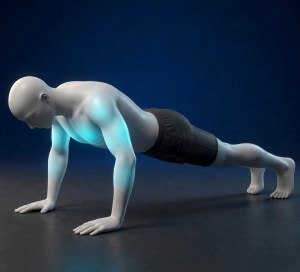
- It hits hardest after a new movement or after a break. Your first push-up sessions? Expect sore pecs. Good sign.
- It eases when you move : a walk, a light session, and you'll feel better. It gets worse when you stay on the couch.
- It lasts 2 to 4 days. And the good news: repeat the same movement, and next time will be milder. Your body adapts fast.
- It stays moderate : the pain does not go above 3 out of 10. Beyond that, it is no longer simple soreness.
You can train with mild soreness. Warm up a bit longer, and do a normal or slightly lighter session.
Warning signs: stop right here
Stop the exercise immediately (and the session if needed) if you feel:
- A sharp pain, that stings or burns during the movement.
- Pain in a joint (knee, shoulder, wrist, elbow) rather than in the working muscle.
- Pain that radiates : your shoulder aching down your arm, or your lower back going down your leg, for example.
- Pain that gets worse as the sets go on instead of easing as you warm up.
- A pop followed by pain, or a sudden loss of strength.
The simple rule to remember
- Mild discomfort that fades as you warm up → keep going gently, listen to your body, reduce range of motion or intensity.
- Pain that increases during the workout → stop. Full stop. No ego, no 'one more set'.
Cutting a session short costs nothing. An injury costs weeks, even months. People who've trained for years all share one thing: they know when to stop.
After: what to do?
- Put the painful movement on hold, not necessarily your whole body. Shoulder hurting? You can still do squats.
- If pain lasts more than a few days, if there's swelling, or if you lose mobility : see a professional (doctor, physio). That's their job!
- Important: the experience and advice I share come from my own training journey. If a pain worries you, see a health professional.
Better to prevent
Most training pains come from three avoidable mistakes:
- Skipping the warm-up : 3 to 5 minutes of mobility and a few easy reps before you start. Always.
- Sloppy form : a sloppy push-up repeated 50 times hurts more than a perfect push-up repeated 10 times. Quality first.
- Progressing too fast : add 1 or 2 reps per session, not 20. Your body needs time to adapt. Give it that time.


Leave a Reply