Type: Legs · Difficulty: Intermediate
Muscles worked: front of the thighs (quadriceps), glutes, back of the thighs (hamstrings) and calves.
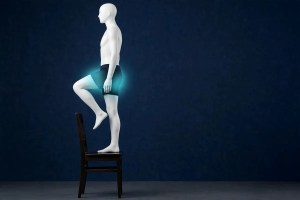
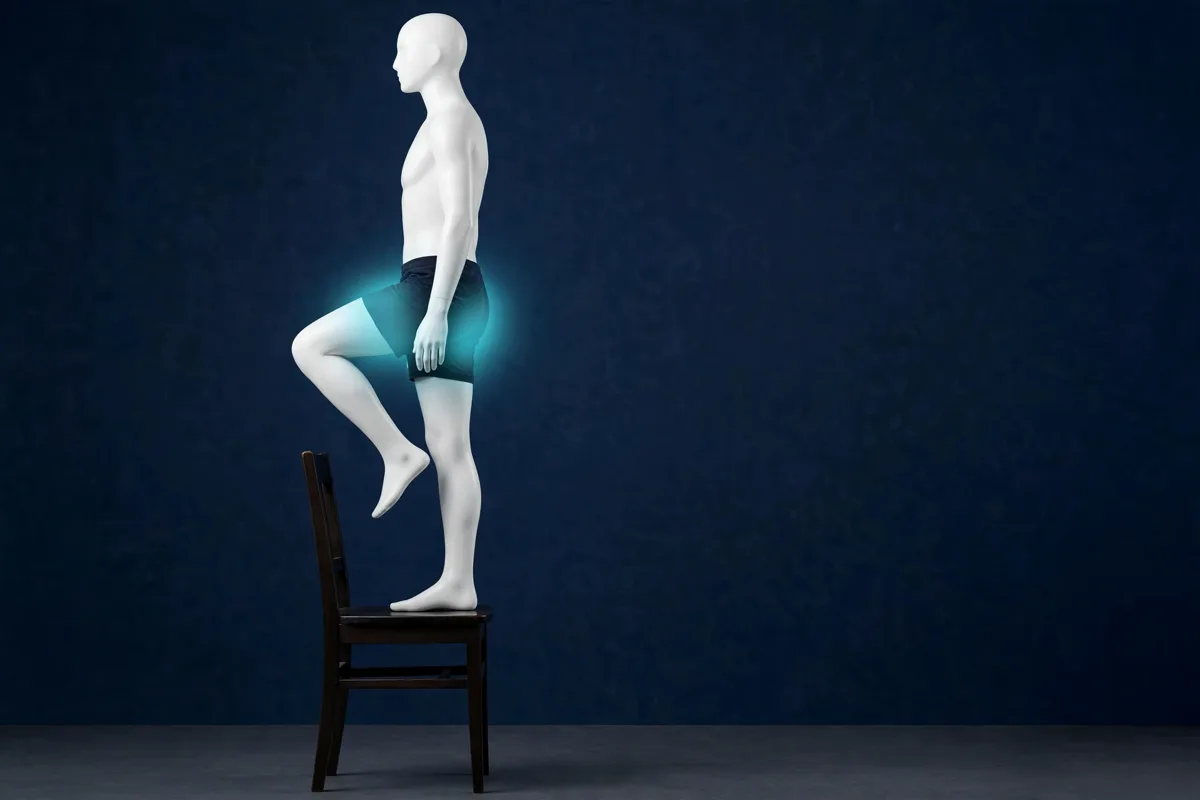
You place one foot on a sturdy chair and step all the way up, one leg at a time. It is the motion of climbing a high step, made demanding enough to build your thighs and glutes, with no added equipment.
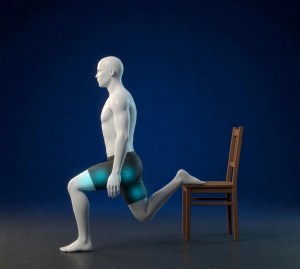
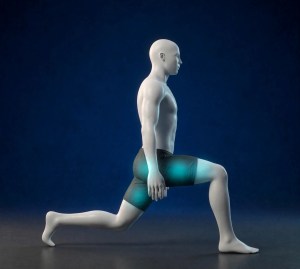
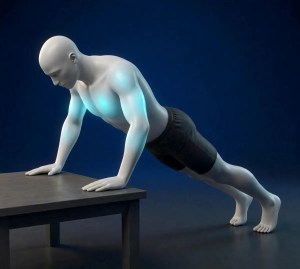
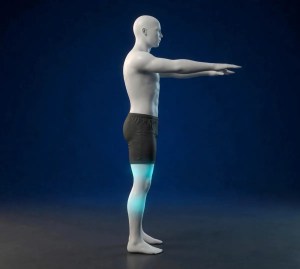
The position


The steps
- Place a sturdy chair with no wheels, its backrest against a wall, so it cannot slide or tip back.
- Place one foot flat in the centre of the seat, the whole foot, not just the toes.
- Brace your abs, keep your torso upright and push through the middle and heel of the foot on the chair to step up.
- Keep pushing with that leg alone until you are standing on the chair, your other knee raised in front of you, and squeeze your glutes at the top.
- Lower yourself slowly, controlling the descent with the top leg, until your other foot reaches the floor. Do all your repetitions on the same leg, then switch sides.
Why this exercise
- Each leg works on its own, like in lunges. The stronger leg cannot compensate for the other, and the differences between the two sides shrink over time.
- The motion is that of stairs and high steps. What you gain here serves you every day: climbing without pulling on the handrail, getting into a tall vehicle, walking on rising ground.
- The top leg does all the work, with no help from the floor leg. The glutes and the front of the thighs work hard, with body weight alone.
- Balance and stability are part of the movement. The ankle, knee and hip of the support leg learn to hold the line, which prepares you for Bulgarian split squats and the assisted single-leg squat.
Common mistakes
- Pushing off the floor leg for momentum: the leg on the chair is the one lifting your body, the other does almost nothing.
- Knee caving inward: keep the support knee pointing in the same direction as your toes through the whole step up.
- Chair sliding or tipping: a sturdy chair with no wheels, backed against a wall, before the first repetition.
- Dropping back down: lower yourself slowly, the controlled descent is part of the work.
- Torso leaning far forward: keep your chest upright and your gaze ahead, abs braced.
Adjust the difficulty
- Easier: choose a lower support, like a stair step, and keep one hand on the wall or the backrest for balance. Start with 4 to 6 repetitions per leg.
- Harder: slow the descent over three seconds, or pause for one second at the top before lowering.
- Benchmark: when 3 sets of 8 clean repetitions per leg go well, without pushing off the floor leg, try a slightly higher support.
- The pace: 3 sets of 6 to 10 repetitions per leg, with 60 to 90 seconds of rest between sets. Both legs done count as one full set.
In case of pain
Stop the exercise as soon as you feel pain. Muscle fatigue is normal, pain is not. If the pain comes back or persists, see a health professional.