Type: Legs · Difficulty: Intermediate
Muscles worked: back of the thighs (hamstrings), glutes, lower back (lumbar muscles) and calves.
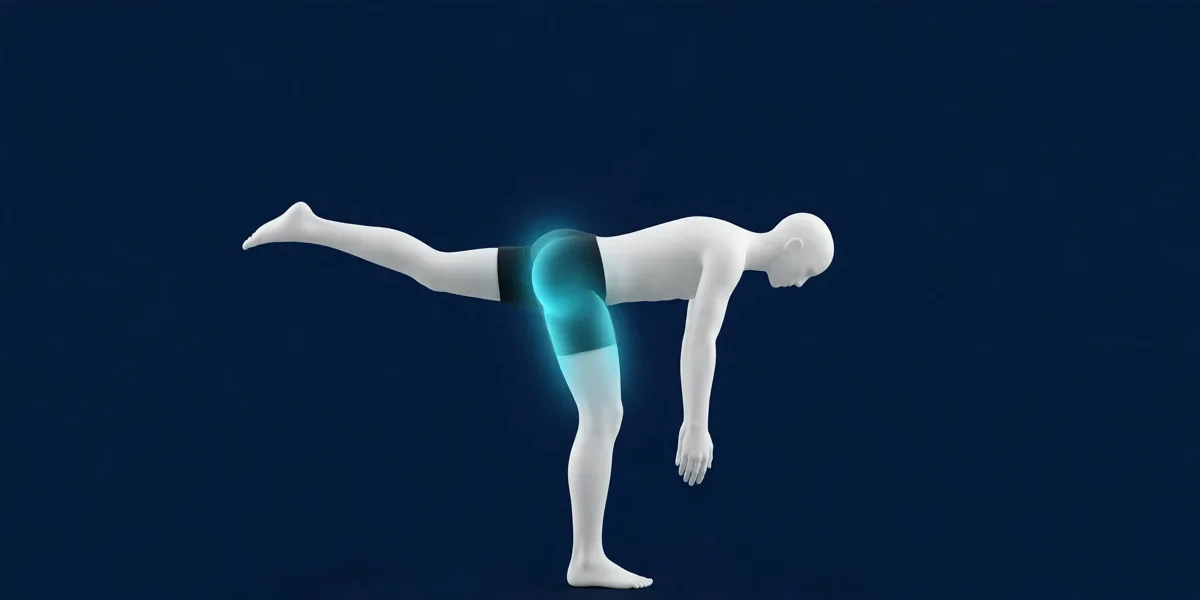
Standing on one leg, you hinge your torso forward while your other leg extends behind you. It is the hip hinge movement, the one that teaches you to pick up and lift with your legs and glutes rather than your back, with no equipment at all.
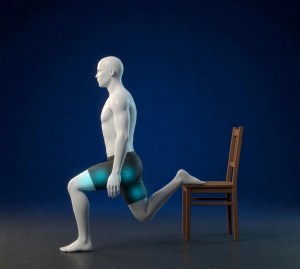
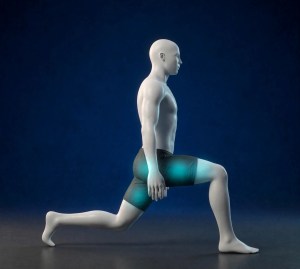
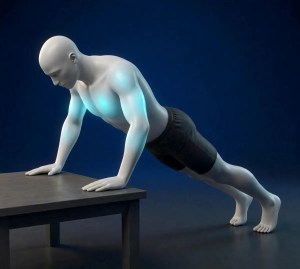
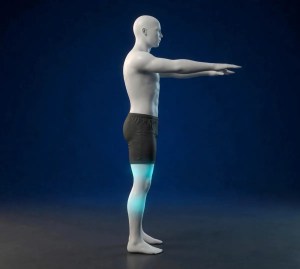
The position


The steps
- Stand tall, feet under your hips, abs braced and your gaze ahead of you.
- Shift your weight onto one leg, knee slightly bent, and gently lift your other foot off the floor.
- Slowly hinge your torso forward from the hips, back straight, while your free leg extends behind you, in line with your back.
- Lower only as far as your back stays straight and your hips stay facing the floor. Your arms hang toward the floor and help your balance.
- Push through the heel and middle of your support foot, squeeze your glute and return to standing under control. Do all your repetitions on the same leg, then switch sides.
Why this exercise
- Squats and lunges bend the knees, this one works the hips, the back of the thighs and the glutes.
- Each leg works on its own. The stronger leg cannot compensate for the other, and the differences between the two sides shrink over time.
- Balance is part of the movement. The ankle, knee and hip of the support leg learn to hold the line while your body hinges.
- The motion is that of picking an object up off the floor or lifting a load while keeping your back straight. What you gain here protects your back every day.
Common mistakes
- Back rounding: hinge from your hips, not your waist, and stop your descent before your back loses its straight line.
- Hips opening toward the free leg side: keep your hips facing the floor and the toes of your back leg pointing down.
- Support knee caving inward: keep it pointing in the same direction as your toes through the whole hinge.
- Lowering too far or too fast and losing your balance: a short, slow range beats a big descent that breaks the position.
- Looking far ahead: keep your gaze on the floor, slightly in front of your foot, neck in line with your back.
Adjust the difficulty
- Easier: keep the toes of your free foot on the floor, slightly behind you, as a light support, or keep one hand on a wall or the back of a chair. Start with 4 to 6 repetitions per leg.
- Harder: slow the descent over three seconds, or pause for one second in the bottom position before coming back up.
- Benchmark: when 3 sets of 8 clean repetitions per leg go well, back straight and with no hand support, slowly increase your range.
- The pace: 3 sets of 6 to 10 repetitions per leg, with 60 to 90 seconds of rest between sets. Both legs done count as one full set.
In case of pain
Stop the exercise as soon as you feel pain. Muscle fatigue is normal, pain is not. If the pain comes back or persists, see a health professional.