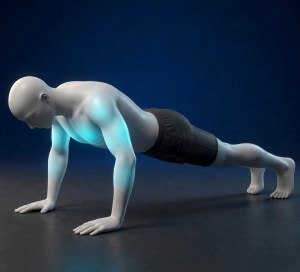
Type: Back · Difficulty: Beginner
Muscles worked: lower back (lumbar muscles) and glutes.
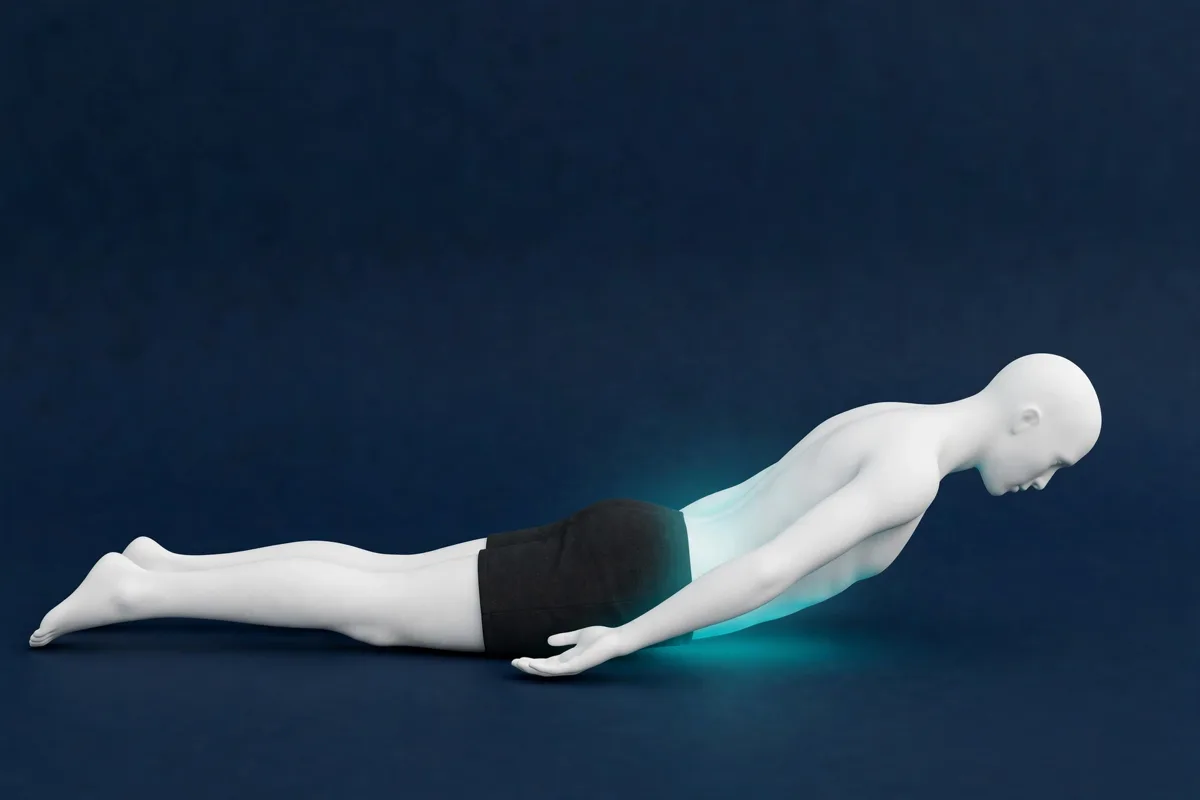
Lying on your stomach, you lift your chest off the floor. This is back work, the other half of every exercise that builds the front of your body. It strengthens your posture and your lower back, with no equipment at all.
The position


The steps
- Lie flat on your stomach, legs straight, tops of your feet on the floor.
- Place your arms along your body, palms up, and rest your forehead on the floor.
- Squeeze your glutes and slowly lift your head and chest off the floor, gaze down, without straining your neck.
- Rise only as far as your back stays comfortable: a few centimetres are enough.
- Pause briefly at the top, then lower yourself slowly back to the floor.
Why this exercise
- It is the only exercise in the catalogue that works the lower back directly. The others build the front and the sides of the core, this one balances the whole.
- A strong back serves your posture every day: sitting for long stretches, carrying loads, working in the garden, shovelling.
- It offsets the hours spent sitting, where your back stays bent forward all day. Here, it works in the other direction.
- It prepares you for movements where your back must stay solid, like the single-leg deadlift and table rows.
Common mistakes
- Rising too high with a hard arch: the movement should stay gentle and pain-free, a few centimetres are enough.
- Lifting your head to look ahead: keep your gaze on the floor, neck in line with your back.
- Jerking up: rise and lower slowly, under control.
- Letting your hips lift: hips and legs stay on the floor through the whole movement.
Adjust the difficulty
- Easier: keep your forehead resting on your hands and lift only a little, or use shorter lifts.
- Harder: reach your arms out in front of you as you rise, and lightly lift your thighs off the floor too.
- The pace: slow lifts with a two or three second pause at the top beat a big height.
In case of pain
Stop the exercise as soon as you feel pain. Muscle fatigue is normal, pain is not. If the pain comes back or persists, see a health professional.