Type: Core · Difficulty: Beginner
Muscles worked: abs and the deep muscles of the core.
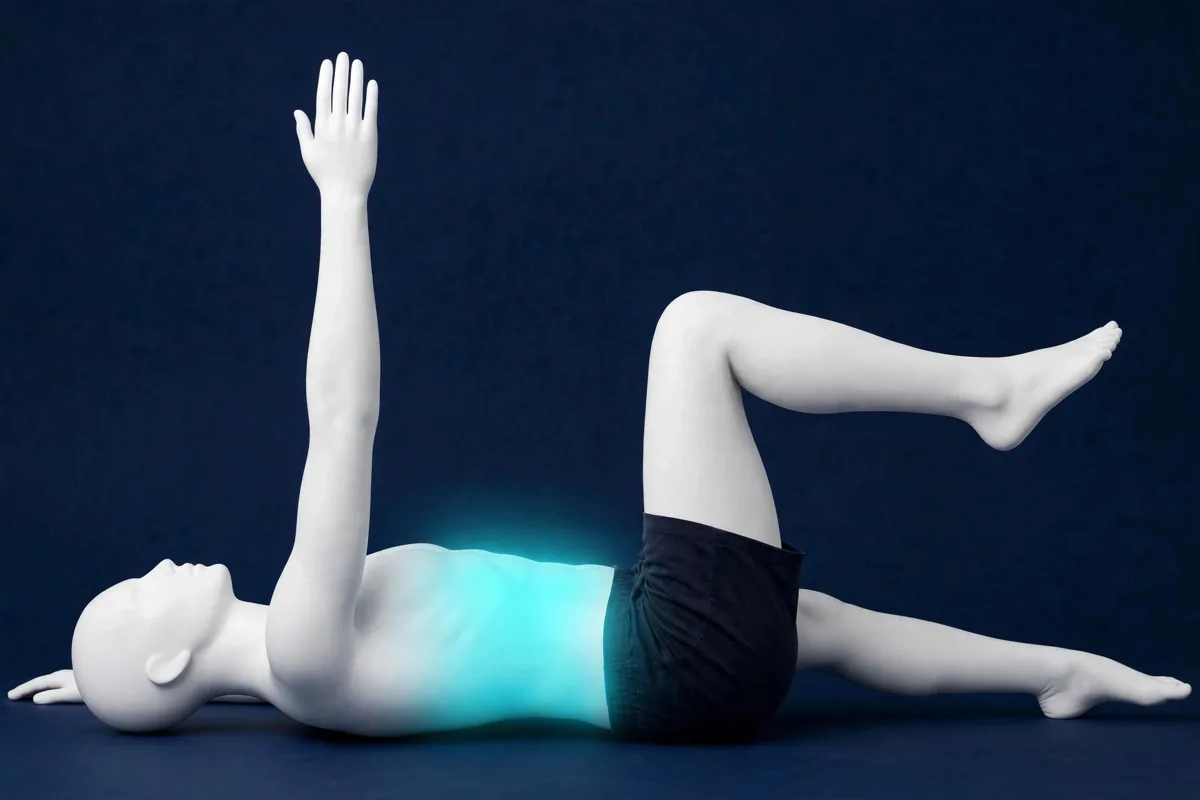
Lying on your back, you slowly lower one arm and the opposite leg while your lower back stays pressed into the floor. Your core is what stops your back from arching, and it is what does the work. A slow, controlled exercise, with no equipment at all.
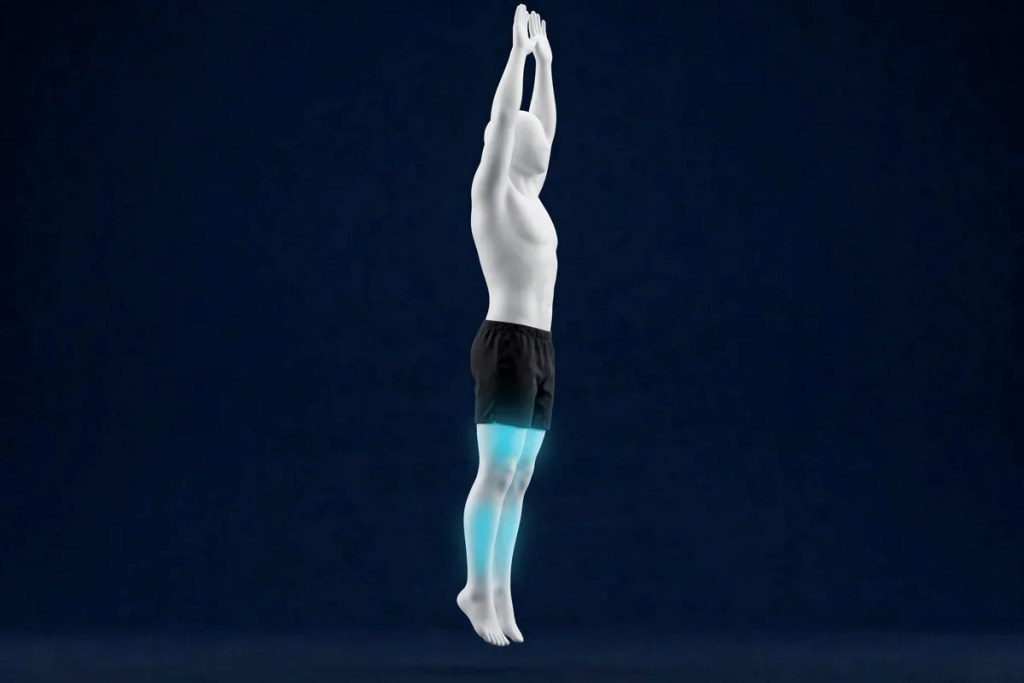
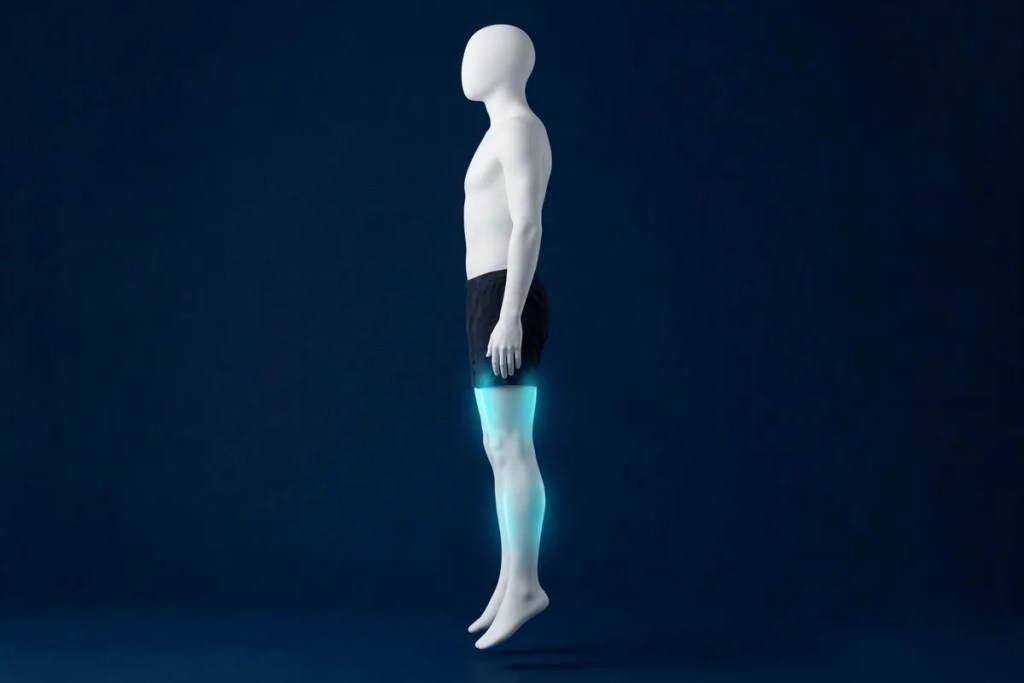
The position


The steps
- Lie on your back and reach your arms toward the ceiling. Bend your hips and knees at right angles, as if your shins formed the top of a table.
- Press your lower back into the floor, as if you were crushing a small bead placed under your back. That pressure must never let up during the whole exercise.
- Breathing out, slowly lower your right arm behind your head and stretch your left leg out just above the floor, at the same time.
- Lower only as far as your lower back stays pressed into the floor. If your back arches, you went too far: shorten the movement.
- Breathing in, slowly return to the start position, then do the same on the other side.
Why this exercise
- It teaches your core to stay stable while your arms and legs move. That is exactly its job in everyday life: walking, carrying, pushing, without your back taking all the strain.
- The floor gives you an immediate answer: as long as your lower back stays pressed down, your position is right.
- The opposite arm and leg work together, just like in walking. Coordination is part of the training, not just strength.
- It is gentle on the joints and the back: lying down, no load, no impact. It is a good exercise to start or restart with, and it prepares you for more demanding core work like Mountain climbers.
Common mistakes
- Letting your lower back arch as the leg lowers: it is the sign that the range is too big or that your abs have given up. Shorten the lowering.
- Going fast: the lowering should take at least three seconds. Speed replaces control, and the core stops working.
- Resting your heel on the floor at the bottom, then going again: keep the leg just above the floor, or your core relaxes on every repetition.
- Lifting your head or straining your neck: your head stays on the floor, eyes toward the ceiling.
- Holding your breath: breathe out as you lower, breathe in as you return.
Adjust the difficulty
- Easier: keep your arms still, reaching toward the ceiling, and lower one leg at a time. Even easier: touch your heel to the floor on each lowering, then lift it back up.
- Harder: lower more slowly, counting to five, and pause for two seconds at the bottom, leg just above the floor, before coming back.
- The pace: 3 sets of 6 to 8 repetitions per side, slowly, with one minute of rest between sets. End the set as soon as your lower back no longer stays pressed into the floor.
In case of pain
Stop the exercise as soon as you feel pain. Muscle fatigue is normal, pain is not. If the pain comes back or persists, see a health professional.