
Type: Push · Difficulty: Intermediate
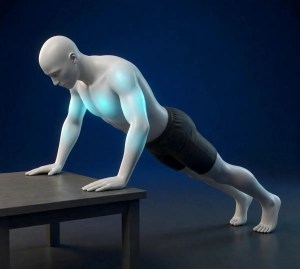
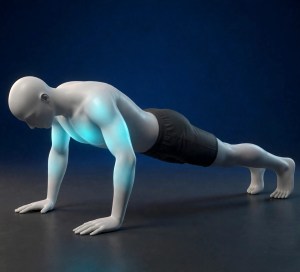
Muscles worked: chest (pectorals), triceps and front of the shoulders (front deltoids), mostly on the pushing side, and core (abs).
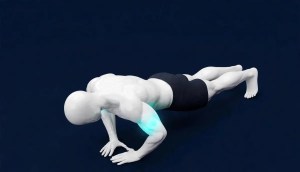
From a classic push-up, you lower yourself by shifting your weight toward one arm, then push back up with that arm before doing the same on the other side. One side works hard while the other helps: it is the step between classic push-ups and archer push-ups, no equipment.
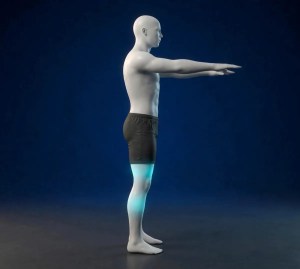
The position


The steps
- Get into a classic push-up position, hands a little wider than your shoulders, body in a straight line, glutes tight and abs braced.
- As you go down, shift your weight toward one hand: that arm's elbow bends at about 45 degrees from your body and holds almost all the load. The other arm stays almost straight, slightly bent.
- Lower until your chest is about a fist's height from the floor, on the working arm's side, without twisting your hips or pelvis.
- Push through the working arm's hand to come back up, returning to the center in the top position.
- Repeat on the other side. Each descent counts as one repetition for the arm that worked.
Why this exercise
- It loads one side harder than classic push-ups, without requiring one-arm push-up strength. It is a real progression step, not a show-off exercise.
- It fixes imbalances: in classic push-ups, the strong side can compensate for the other without it showing. Here, each side has to do its own work in turn.
- Your core works against rotation: while the weight shifts sideways, the body has to stay straight and stable.
- It prepares you for archer push-ups, where the support arm is fully straight on the floor, and later for one-arm pressing.
Common mistakes
- Letting the working arm's elbow flare out to the side, in line with the shoulder: the shoulder takes everything. Keep the elbow at about 45 degrees from your body, like in classic push-ups.
- Locking the support arm completely straight: keep it slightly bent. It helps a little at the bottom and at the start of the push back up.
- Twisting your hips or letting your pelvis tip toward the working side: the body stays in a straight line, like a plank being moved sideways.
- Lowering to the center instead of toward the hand: your chest has to come over the working arm's hand, or the shift serves no purpose.
- Losing position at the end of a set, when fatigue sets in: your shoulder blades must stay set from start to finish. If your shoulder sends a signal, the set is over.
Adjust the difficulty
- Easier: reduce the shift, lower almost to the center while loading one side a little more than the other. Even easier: the same thing from your knees.
- Harder: pause briefly at the bottom before pushing back up, or move to archer push-ups, the support arm straight and its hand far from the body on the floor.
- The pace: 3 sets of 4 to 6 repetitions per side, with one and a half minutes of rest between sets. Stop the set as soon as the shift is no longer clean.
In case of pain
Stop the exercise as soon as you feel pain. Muscle fatigue is normal, pain is not. If the pain comes back or persists, see a health professional.