Type: Full body · Difficulty: Advanced
Muscles worked: thighs, glutes, chest, shoulders and core, with your heart and breathing heavily involved.
Standing, crouched, in a plank, back to crouched, then a jump: the burpee chains the whole body in one continuous movement. It is a very demanding exercise, and also the one that forgives sloppy technique the least. The step-by-step version, without jumps, gives the same sequence in a more accessible form. During the plank, tighten your abs and glutes: that is what keeps your body in a straight line and protects your lower back.
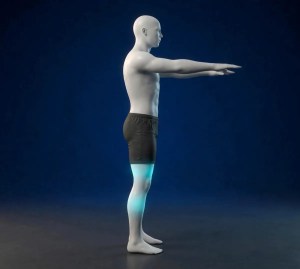
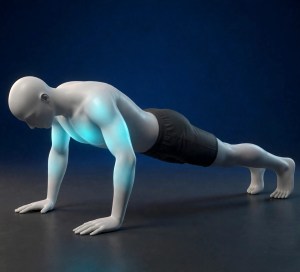
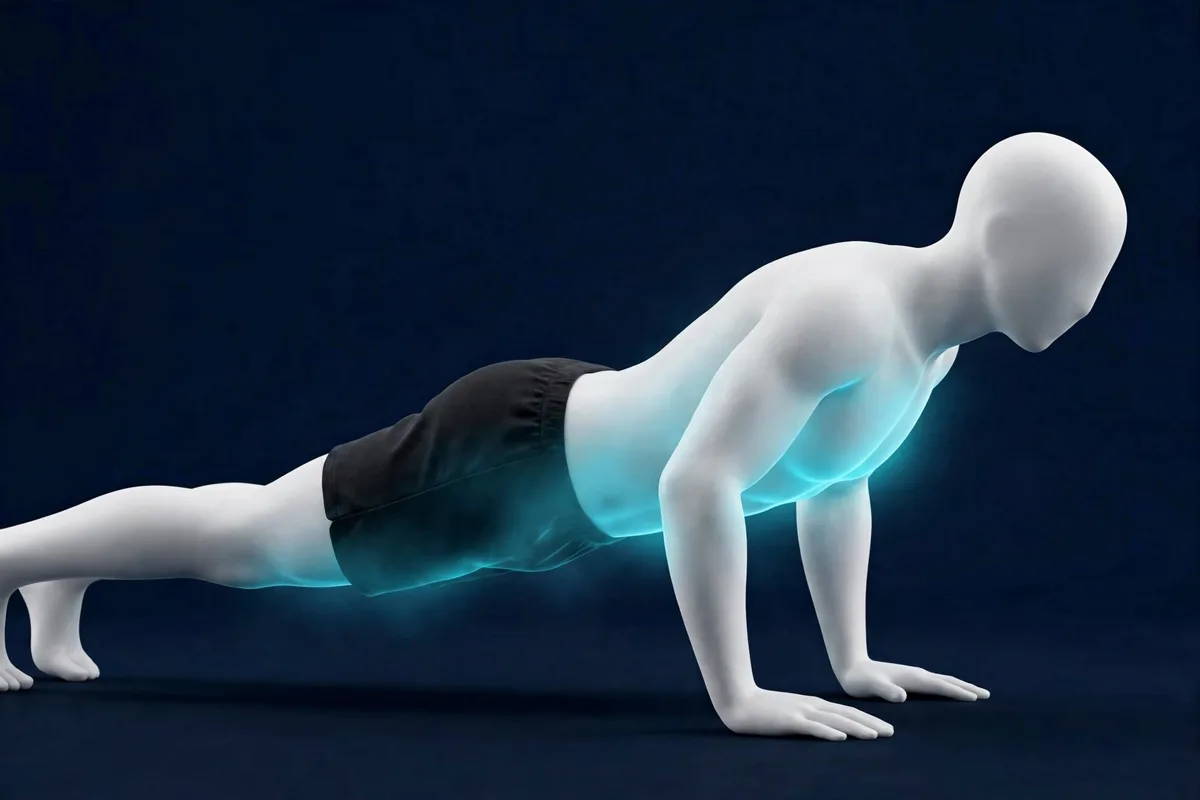
The position


The steps
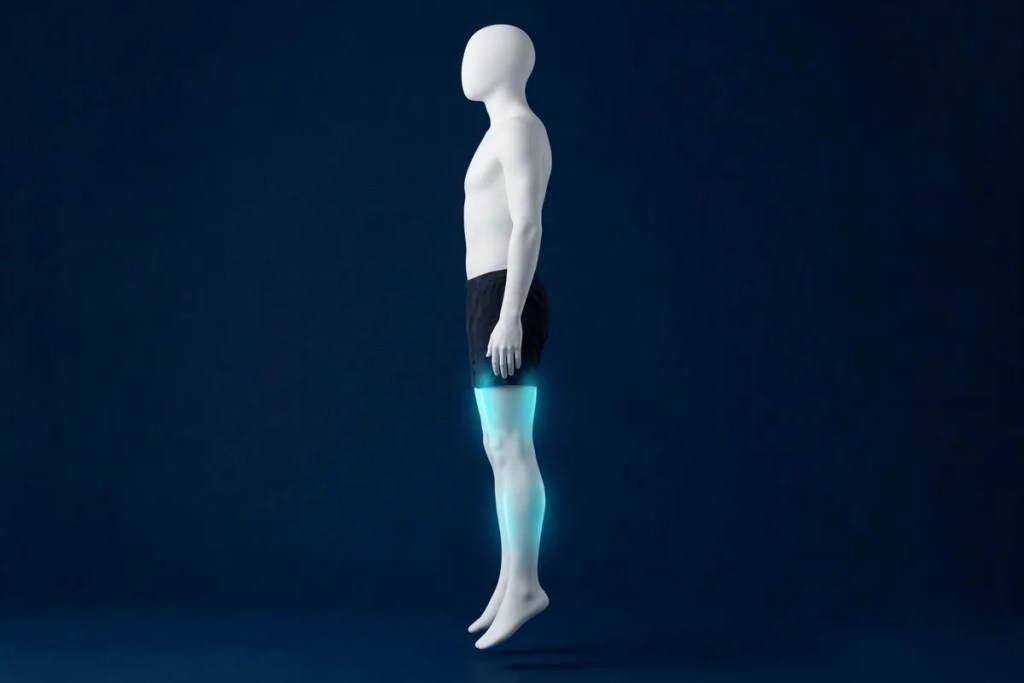
- Stand with your feet hip width apart, back straight.
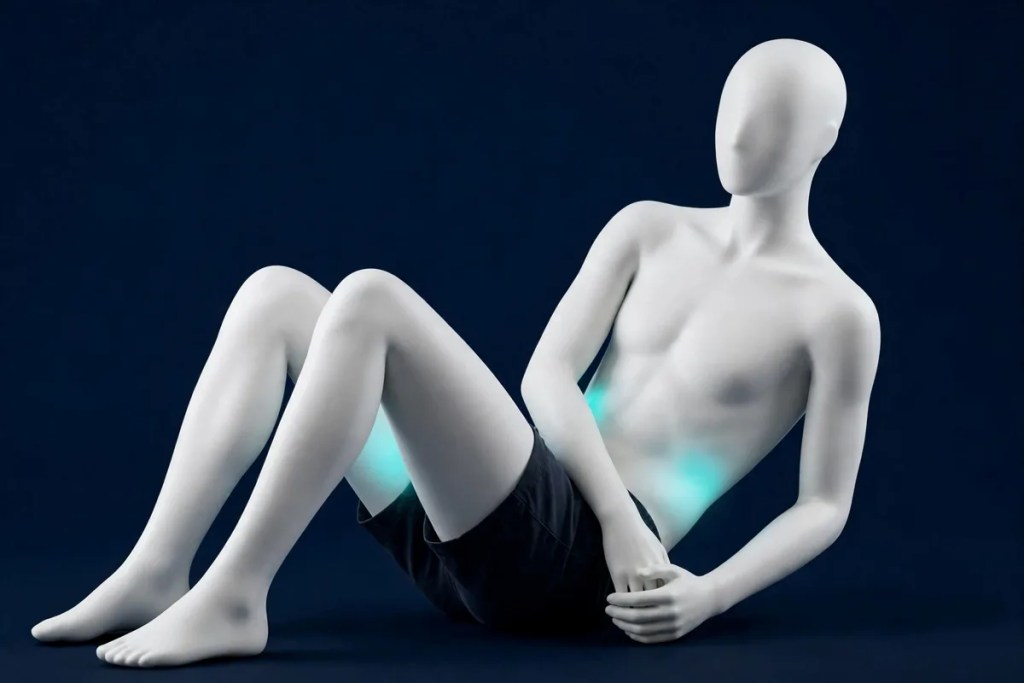
- Crouch down and place your hands on the floor in front of your feet, shoulder width apart.
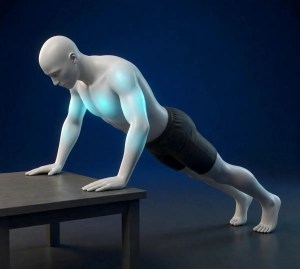
- Jump both legs back behind you to land in a plank: body in a straight line from head to heels, abs and glutes tight, hips neither too high nor sagging.
- Jump both feet back toward your hands, landing crouched, feet flat or nearly, knees in line with your feet.
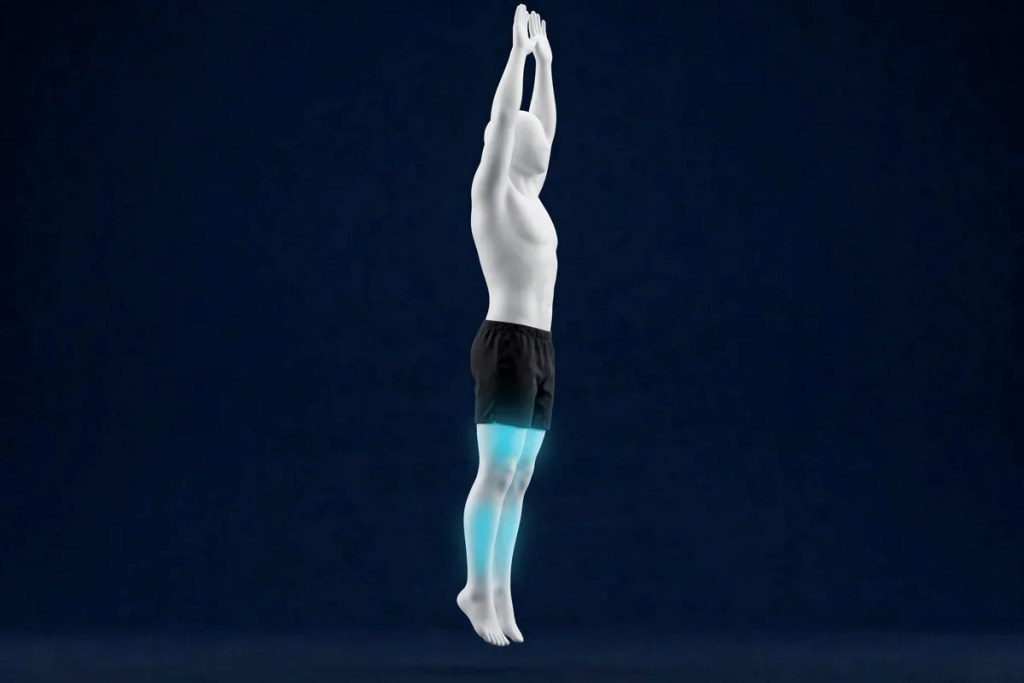
- Push through your legs to stand up into a jump, arms rising above your head, then land softly and flow straight into the next repetition.
Why this exercise
- It brings together in one movement what other exercises do separately: the leg bend, the floor support, the plank hold and the jump. Few exercises ask so much of the whole body in so little time.
- It raises your heart and breathing quickly, in short sets. For the time invested, the overall effort is hard to match.
- It trains transitions: going from the floor to standing and from standing to the floor, quickly and under control, is a useful skill well beyond training, for example to get back up after a fall.
- It leaves no room for quiet compensating: as soon as your core gives up in the plank or your knees cave in on a landing, it shows, and that is the signal to slow down or switch to the step-by-step version.
Common mistakes
- Letting your hips sag in the plank, lower back arched: your back takes every repetition. Tighten your abs and glutes, or slow down and set your knees down for a fraction of a second.
- Landing with your feet far ahead or far behind on the return, then standing up with a rounded back: your feet come back close to your hands, and the jump push comes from your legs, not your back.
- Letting your knees cave inward on the landings: your knees stay in line with your feet, on the way out, on the return and on the final jump.
- Throwing your legs back and dropping to the floor without control: your hands take the support before your feet leave, and the plank arrives held, not endured. If your wrists are sensitive, support on closed fists, on a mat, keeps your wrists straight.
- Chasing speed from the first set: a fast, broken-down burpee is worth less than a slower, clean one. Speed comes after technique, never before.
Adjust the difficulty
- Easier: the step-by-step version. Step one foot at a time back into the plank, come back one foot at a time, stand up without jumping. Then add the feet jump only, then the final jump, one element at a time.
- Harder: add a full push-up during the plank, chest lowering under control and coming back up before the feet return. Keep it for pain-free shoulders and wrists, with classic push-ups already solid.
- The pace: 3 sets of 5 clean repetitions, with ninety seconds to two minutes of rest between sets. Add repetitions only when the last one of the set still looks like the first.
In case of pain
Stop the exercise as soon as you feel pain. Muscle fatigue is normal, pain is not. If the pain comes back or persists, see a health professional.