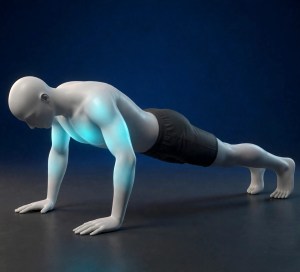

Type: Push · Difficulty: Advanced
Muscles worked: chest, front of the shoulders and triceps, with the core braced through the whole movement.
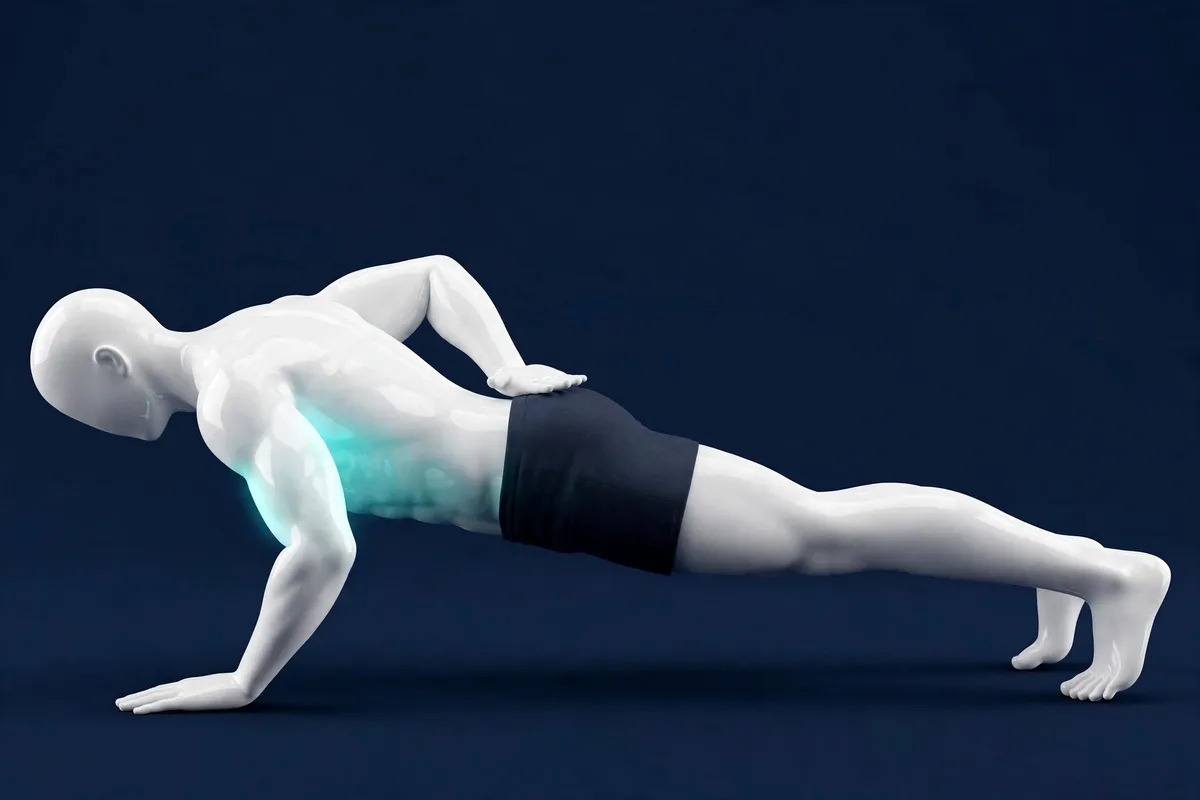
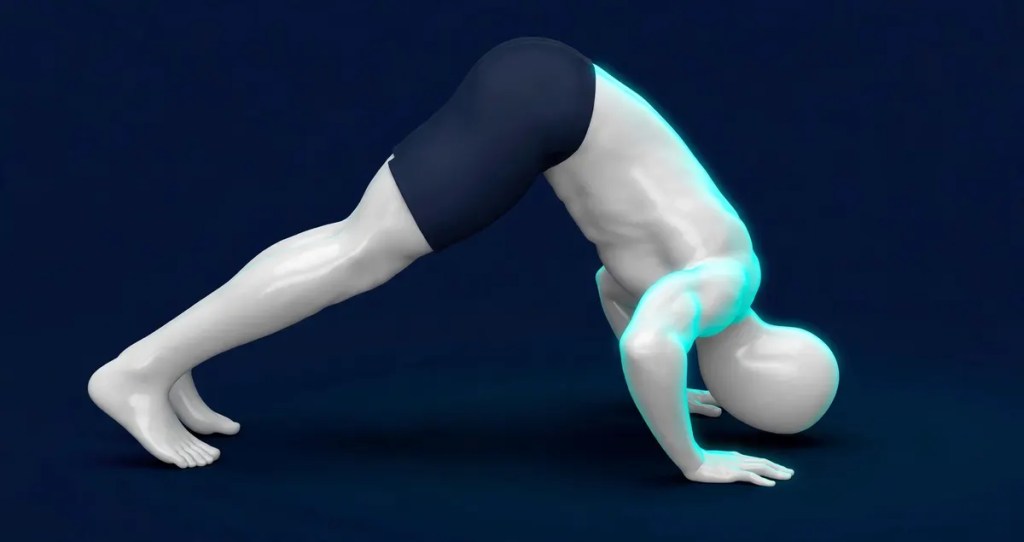
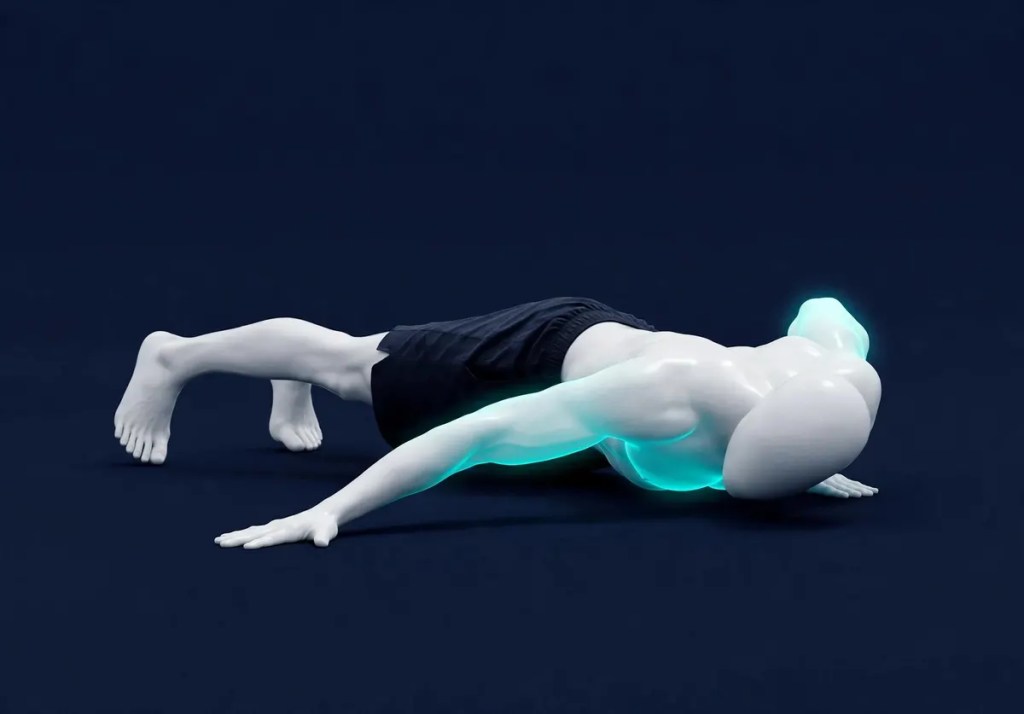
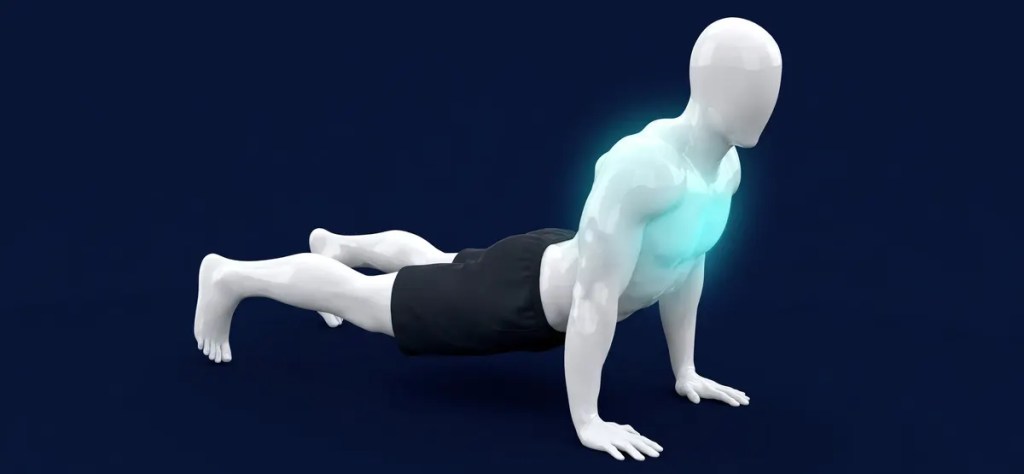
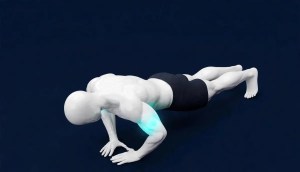
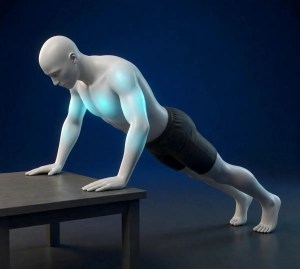
You keep the classic push-up position, but you walk your hands back toward your hips and lean your body forward, shoulders ahead of your hands. That small shift changes everything: your body weight tips forward, and every repetition becomes far more demanding for your chest and the front of your shoulders, without adding any weight at all.
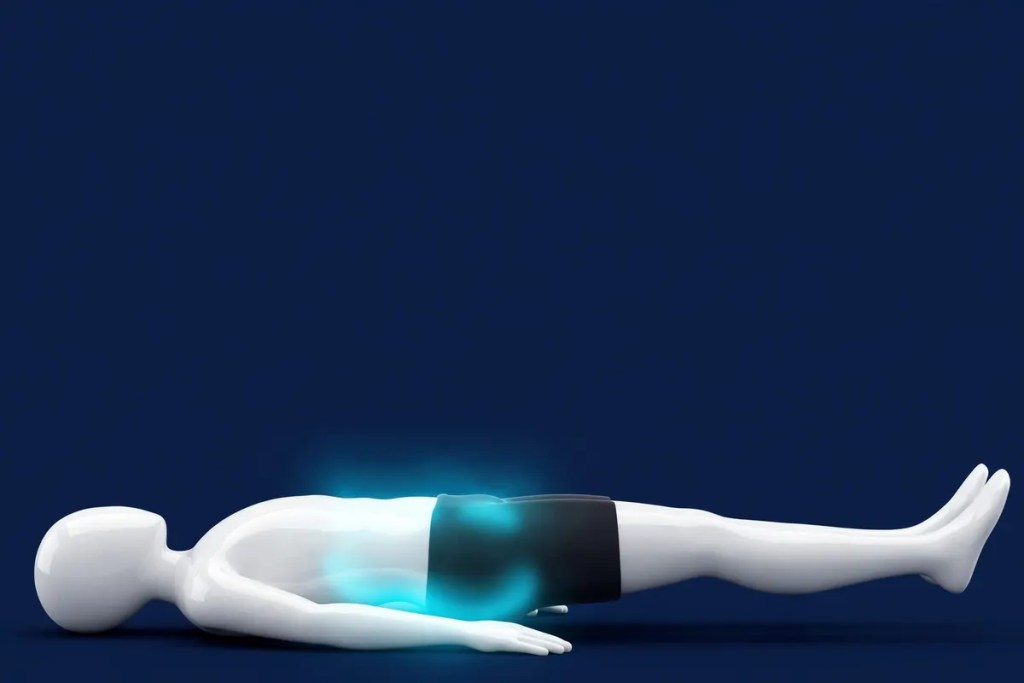
The position


The steps
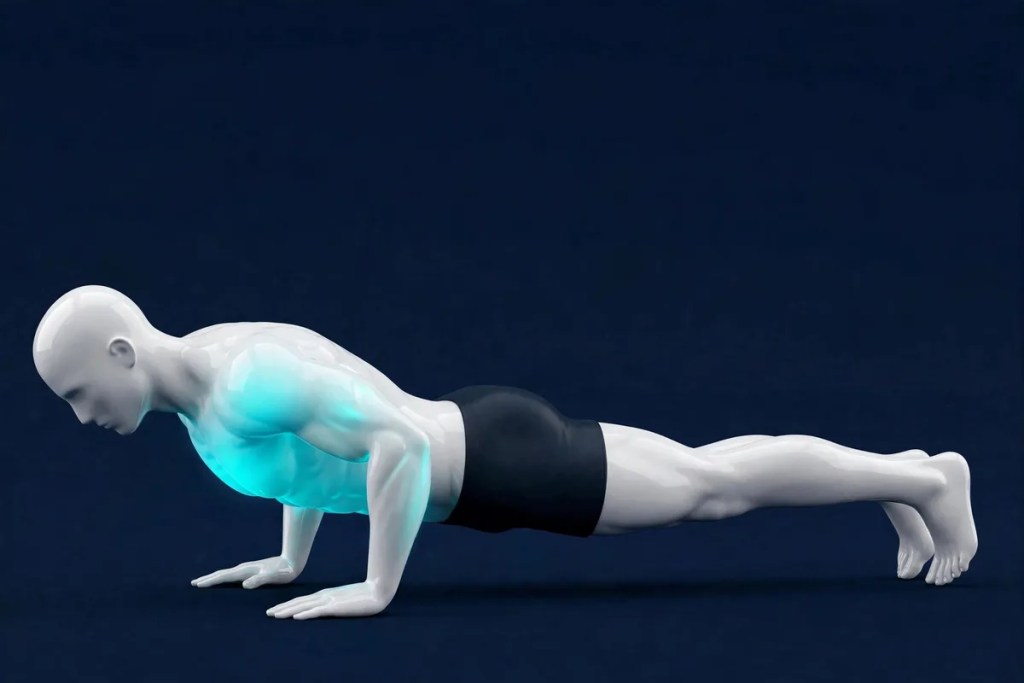
- Set up in a classic push-up position, body in a straight line, then walk your hands a few centimetres back toward your feet: at the start, they sit level with your lower chest, no lower.
- Lean your body slowly forward until your shoulders pass your hands. Your body stays straight, your feet do not move, only the weight tips forward.
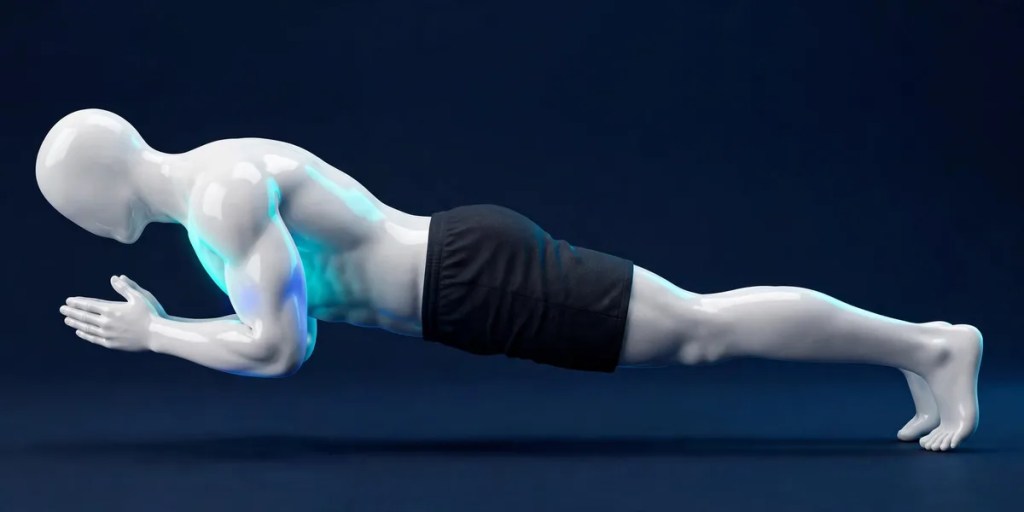
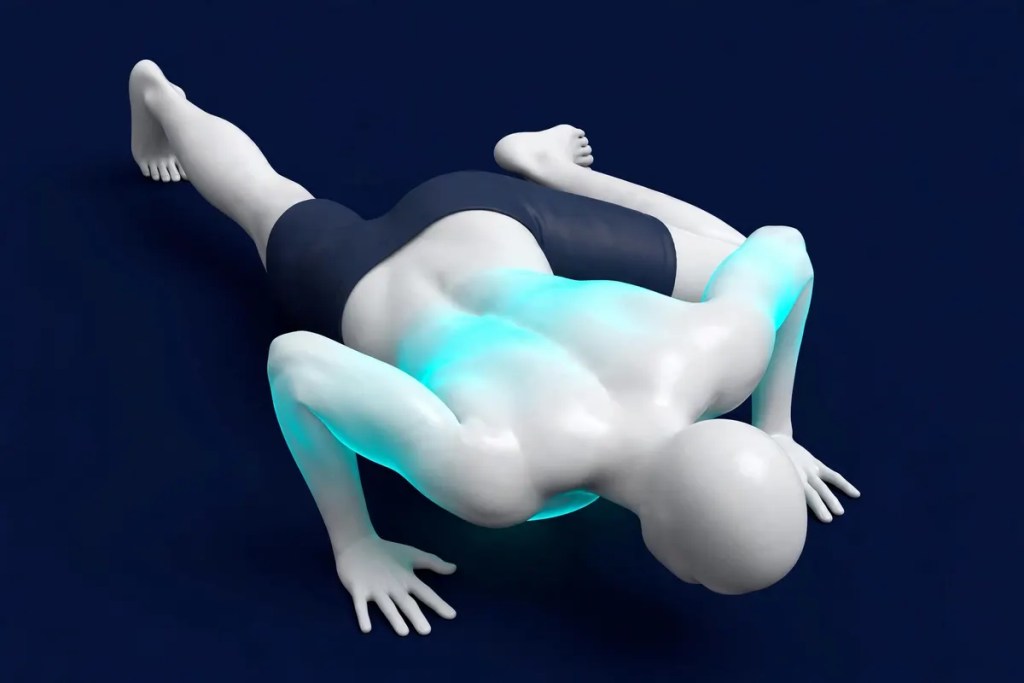
- Bend your elbows keeping them along your ribs and lower slowly, keeping your shoulders ahead of your hands through the whole descent.
- Lower until your chest comes close to the floor, without your hips dropping or your back arching.
- Push hard into the floor to straighten your arms without letting your shoulders drift back, then repeat. Once the position is clean and pain free, you can walk your hands a little farther back, in small steps, never all the way to your hips in one go.
Why this exercise
- The load rises with no added weight: walking your hands back and leaning forward shift a growing share of your body weight onto your chest and the front of your shoulders.
- The adjustment is fine and measurable: a few centimetres of hand placement clearly change the difficulty, which allows progress in steps rather than jumps.
- Your triceps work hard: your elbows stay along your ribs through the whole push, as in close-grip push-ups.
- Your core holds the whole movement: without a solid brace, your pelvis drops and the lean is lost, so the middle of your body works on every repetition.
Common mistakes
- Walking your hands all the way to your hips on the first try: the full version is very demanding on your shoulders and wrists. The hand placement is earned in steps, session after session.
- Letting your pelvis sag or your back arch as you lower: your body stays in a straight line, otherwise the load leaves your chest and moves to your lower back.
- Letting your elbows flare out to the sides: they run along your ribs, as in a close grip, otherwise your shoulders take the leaning load badly.
- Drifting your shoulders back as you push to take the pressure off: if your shoulders come back over your hands, the exercise becomes a classic push-up again. The lean is kept from the first repetition to the last.
- Dropping in free fall: the slow descent is what makes the lean holdable; a fast descent breaks the position and overloads your wrists.
Adjust the difficulty
- Before you start: this exercise calls for clean classic push-ups, with your elbows running along your ribs rather than flaring out to the sides, pain-free shoulders and wrists that tolerate the leaning load. Always start with the smallest hand shift, even if the position feels easy the first few times.
- Sensitive wrists: the base position stays flat hands. If your wrists are sensitive or bend back poorly, do the exercise on your fists, wrists straight and in line with your forearms. The load stays the same, but the wrist no longer bends backward.
- Easier: walk your hands back only a few centimetres, just behind the shoulder line, or do the exercise on your knees to reduce the share of weight your arms carry.
- Harder: walk your hands one step farther toward your hips, or pause for one second at the bottom, chest close to the floor, before pushing back up.
- The pace: start with 3 sets of 5 to 8 slow repetitions, with ninety seconds of rest between sets. Adjust the number to your level; end the set as soon as your pelvis sags, your back arches or your shoulders drift back over your hands.
In case of pain
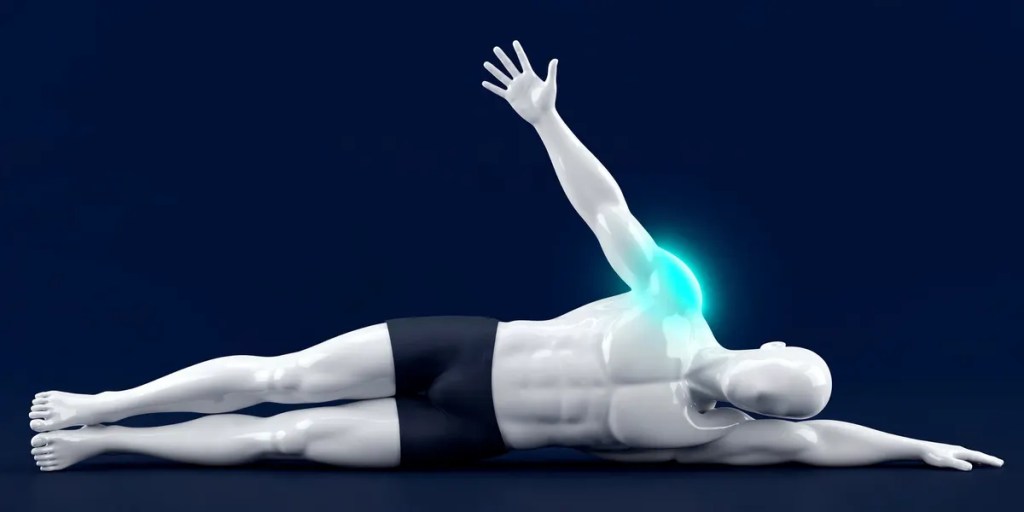
Stop the exercise as soon as you feel pain. Muscle fatigue is normal, pain is not. If the pain comes back or persists, see a health professional.